
The Balkans are the easiest region in Europe to plan a trip badly.
Not because the region is hard. Because it looks simple on a map and behaves differently on the ground. Six countries sit close together, the distances look short, and every photo looks reachable in a week. Then you arrive, and the mountain road that looked like an hour takes three, the border you forgot about eats an afternoon, and the famous beach everyone raved about was somebody’s idea of famous back in 2015.
You can absolutely see the Balkans on your own. Plenty of people do. The real question is which Balkans you end up with. The postcard version you half expected, or the one you did not know to ask for.
This guide is about the second one. How a private custom trip through Albania and the wider Balkans actually gets built, what it feels like to travel with a local team who lives here, and why the difference shows up most for families, couples and groups. Money comes into it too, though not in the way you would guess.
The short version
Planning a private custom tour of the Balkans works best when you start with what you actually want, set a rough budget and season, then hand the logistics to a local team that lives in the region. A good Albania-based DMC like InAlb builds the trip around your pace across Albania, Montenegro, Kosovo, North Macedonia, Croatia and Greece, opens doors you cannot find online, sequences the driving and the borders so no day is wasted, and stays reachable while you travel. You get a trip designed for you and far fewer bad surprises.
What is a private custom tour, really?
A private custom tour is a trip built from scratch around your pace, your interests, your group and your budget, run privately for you and nobody else. It is the opposite of buying a seat on a fixed departure. The real difference sits in who you work with.
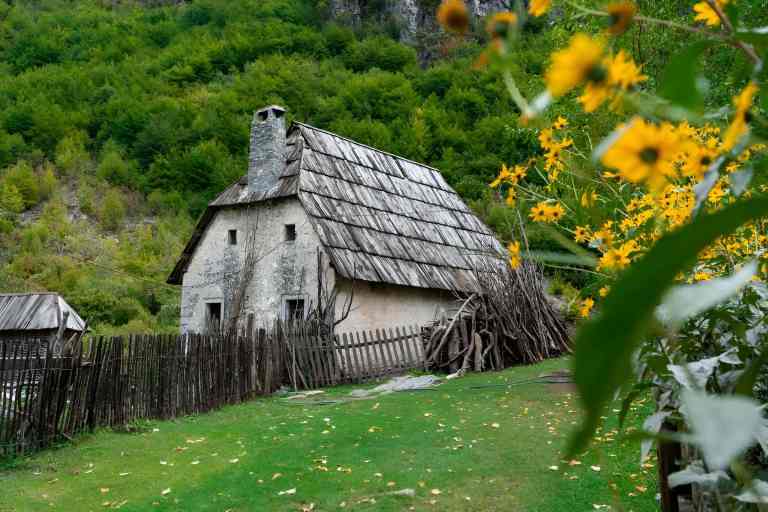
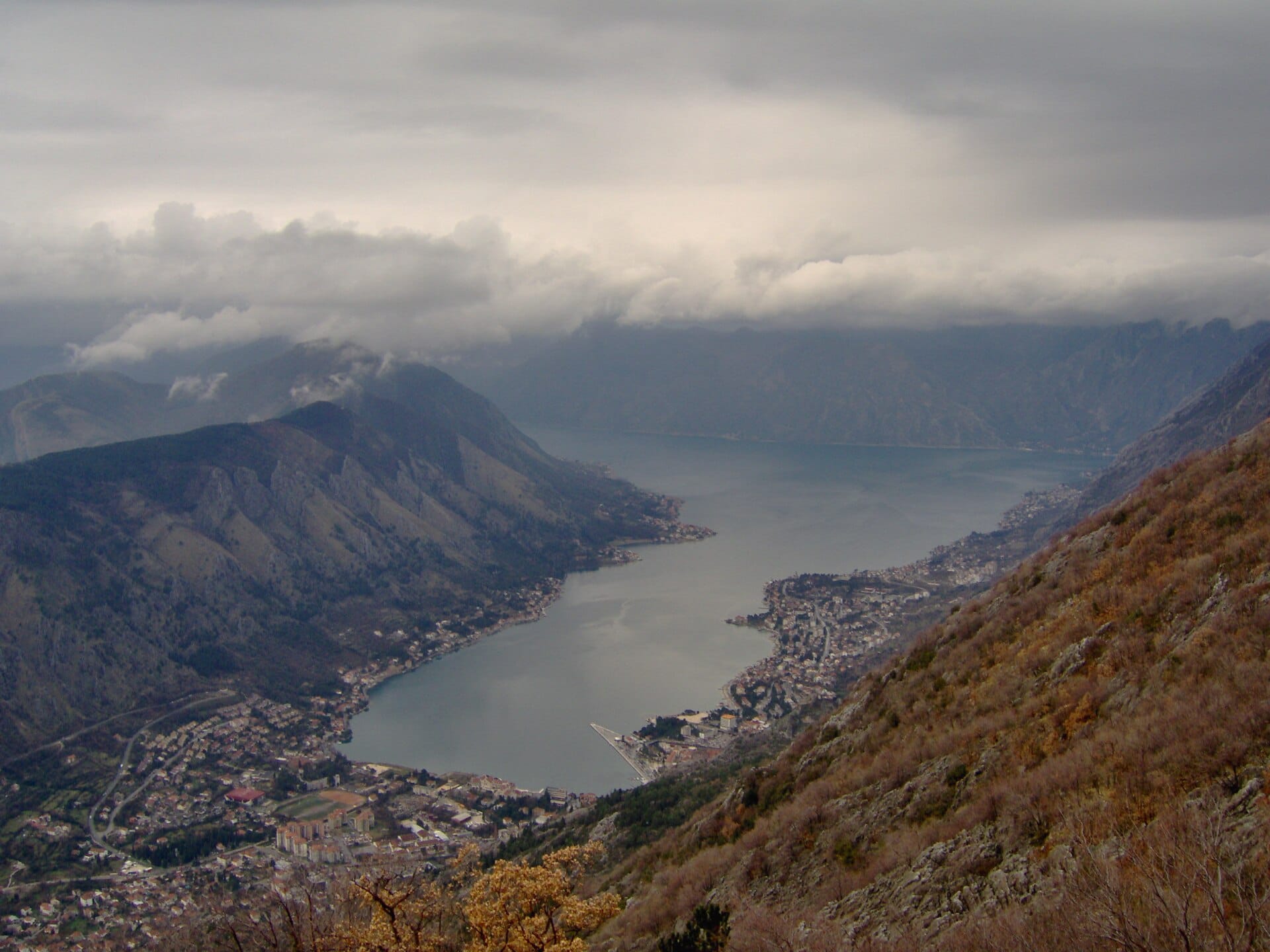
Big online platforms are listing machines. They gather hotels and generic day tours and leave you to assemble the puzzle. A destination management company, a DMC, works the other way. We live in the region, speak the languages, and have real relationships with the family guesthouses in Theth, the boat owners in Kotor Bay, the wine makers in Tikves, the cook in Gjirokaster who still makes byrek the way her grandmother did. When you plan with a local team like InAlb, you borrow knowledge that no search box holds. In a region where the best parts sit off the main road, that is the whole game.
Read more about InAlb and our local team.
What do you actually get from planning with a local team?
Three things, mostly, and none of them fit in a price comparison.
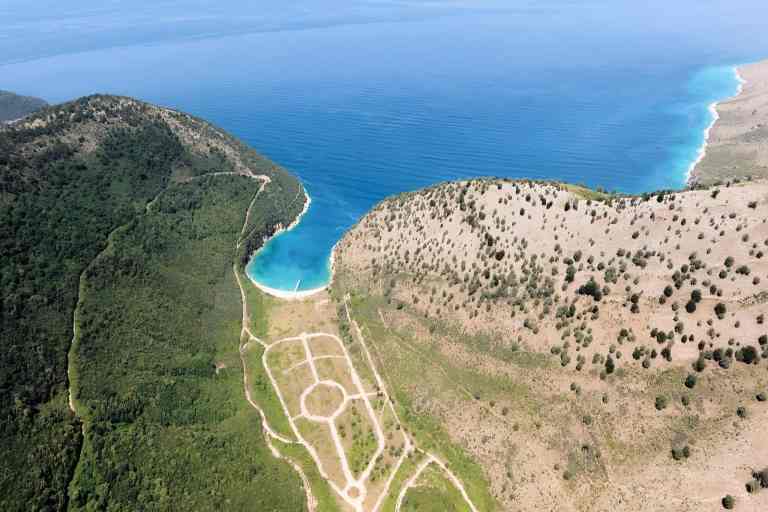
Access is the first. The home kitchen instead of the restaurant with a laminated menu. The cove you reach by boat rather than the beach with the car park. The guide who is also the historian’s cousin and can get you into the church that is usually locked. This is the part travellers remember, and it is the part you cannot book from a screen.
No unpleasant surprises is the second. We know which road is closed for works this month, which ferry only runs on certain days, and which town is full because of a festival you never heard of. You will read more about that further down, because it is the perk that quietly saves whole afternoons.
A trip that fits you is the third. A slow pace or a full one. Guided when you want context, left alone when you want the day to yourself. One person who owns your trip from the first email to the day you fly home, so you are never re-explaining yourself to a call centre.
Cost comes into it, but not as the headline. Because we book rooms and transport at local rates and route the trip so you do not pay for wasted nights, the total often lands below what people expect. That is a nice by-product. It is not the reason to travel this way.
How does the planning work?
It starts with a conversation, not a shopping cart. You send an inquiry with your dates, rough budget and what you care about. A dedicated trip designer replies with a first itinerary draft, then the two of you refine it back and forth until it fits. Once it is right, we handle the bookings, permits, guides, transport and border logistics, and stay reachable while you travel. Before you fly, you get a pre-trip pack with the day-by-day plan, meeting points and practical notes, so nothing is left for you to work out. At InAlb one person owns your trip end to end, so nothing falls through the gaps between countries.
The refining stage is where the trip gets good. This is where we say things like, that town is lovely but half a day is plenty, or, skip that viewpoint in August and I will show you a quieter one twenty minutes away. You cannot get that from a booking site, because a booking site has never stood there.
Who it is for, with real trips we have built
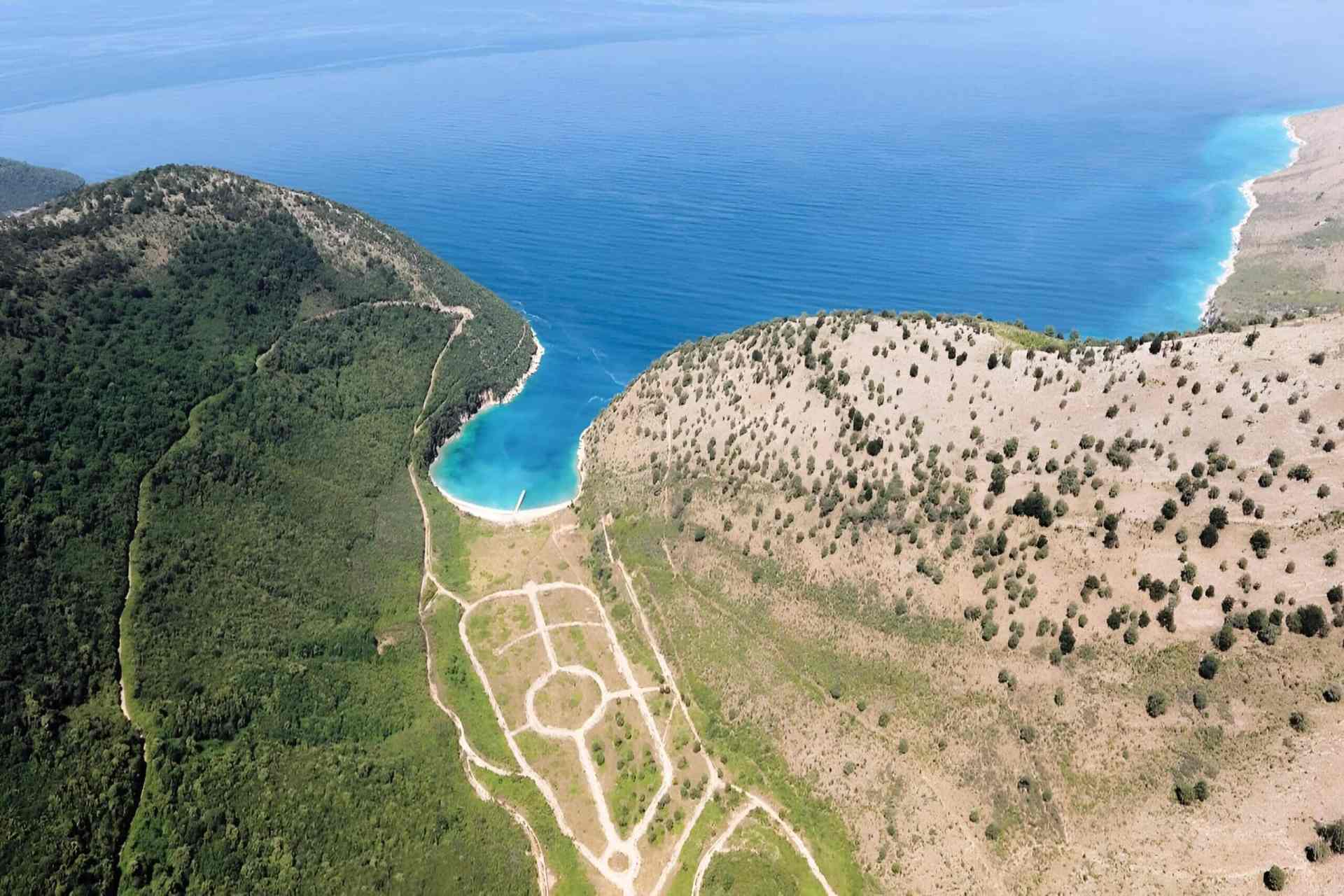
Families. A family of four from the UK wanted ten days of beaches, history and things the kids would not moan about. We opened in Tirana with a street art and bunker walk, moved to Berat for a castle day with a local historian, gave them three days on the Riviera including a boat to a beach you can only reach from the water, then finished in the Valbona valley, where the children learned to make bread with a village family. A private driver handled every transfer, which meant the parents never once white-knuckled a mountain road. That is the family perk in one sentence. The logistics stop being your job, so you get to be on holiday with your kids instead of playing driver and map.
Couples. A couple who cook for fun asked for fourteen days of food through Albania, North Macedonia and Kosovo. We put them in a Gjirokaster kitchen for a class built on recipes handed down four generations, a wine tasting in the Tikves region, and a farm lunch in rural Kosovo. Most nights they ate in homes and small taverns rather than restaurants. A guide came along for the cultural stretches and then made himself scarce, because the whole point of a couple’s trip is the time you spend as two. Access when you want it, privacy when you do not. That balance is hard to book yourself and easy for us to arrange.
Groups. Ten friends celebrating a fortieth wanted coast and mountains across Albania and Montenegro without the group falling apart over daily decisions. We ran them in a private minibus with a guide, gave them a private boat day on the Bay of Kotor, and set up one long dinner in a family konoba where the table kept filling with food nobody had ordered. The real win was social. In most groups, one poor soul ends up as the unpaid trip organiser and spends the whole holiday herding everyone. With a local team running the logistics, that person gets their holiday back, and the group stays a group.
See more sample Balkan itineraries.
The surprises a local team quietly saves you from
Here is the part that never shows up in the brochure. The road works nobody outside the country has heard about, closing your scenic route the week you arrive. The ferry that only runs on certain days, which you discover at the empty dock. The festival weekend when every bed in a town is gone and you overpay for a room forty minutes away. The border between Albania and Montenegro, or Kosovo and Serbia, backing up on exactly the afternoon you needed to be somewhere. The rental car that is fine on the highway and hopeless on the last hour to the guesthouse.
None of these are disasters on their own. Stacked across two weeks, they are the difference between a trip you tell stories about and a trip you survived. We see them coming because we watched one happen to someone last month. That is not a superpower. It is just living here.
What does a custom Balkan trip cost?
A genuine mid-range trip runs roughly EUR 100 to EUR 200 per person per day, covering accommodation, transport, guiding and the planned activities. Longer regional trips work out lower per day, because the fixed costs spread across more nights. Premium runs higher, with boutique hotels and private transfers, but the planning process is the same at any tier.
Three things move the number more than anything else. Group size, because a private driver and guide split ten ways costs far less per head than split two ways. Season, since July and August on the coast are the priciest weeks of the year. And accommodation tier, which is the single biggest lever you control. The prices above are a starting point, not a fixed menu. For anyone budgeting on the ground, 1 EUR is roughly 95 ALL in Albania.
When is the best time to go?
Late April to May and September to October are the sweet spot for most of the region. Warm weather, thinner crowds and lower prices than peak summer, and honestly a nicer trip. Peak season on the Albanian Riviera and the Croatian coast runs June through August, when the beaches are full and the rooms are dearest. For hiking in the Albanian Alps or North Macedonia, July and August give the most reliable trail conditions. Winter is quiet and good for cities, thermal springs and Christmas markets in Tirana, Sarajevo and Zagreb.
There is a small secret in that paragraph. A room in Berat or Ohrid in late September is calmer, prettier and cheaper than the same room in early August. If your dates are flexible, shoulder season is the easiest upgrade you can make.
How many days do you need?
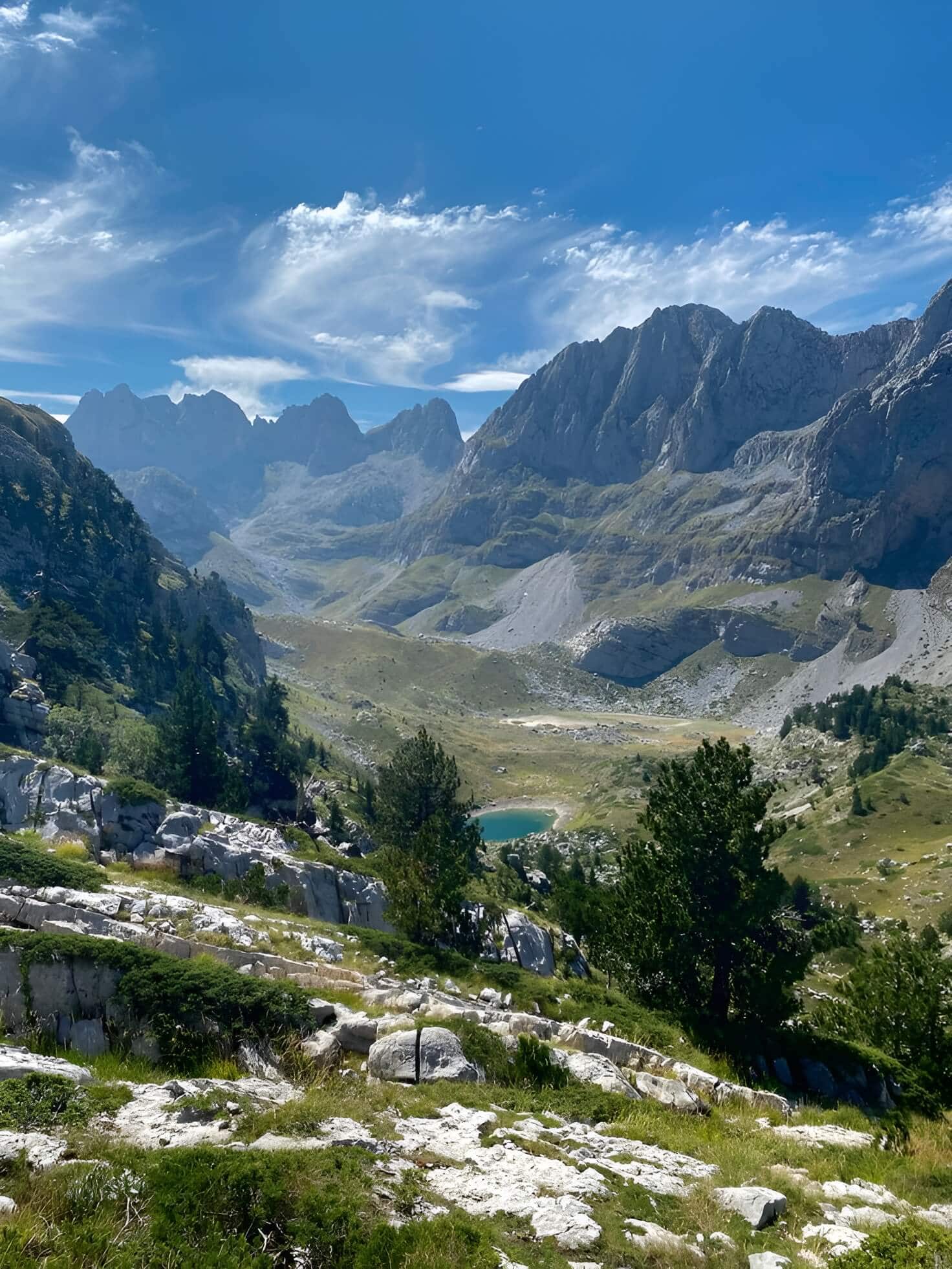
Under seven days keeps you to one country or one region. Ten to fourteen days opens up a real multi-country trip. Three weeks or more lets you take the Balkans slowly, which is how the Balkans are best taken. Albania alone can fill two full weeks, from the UNESCO towns of Berat and Gjirokaster to the beaches of Ksamil and the alpine valleys of Valbona and Theth.
The classic mistake is greed. The countries look small and close, so people try to stack five of them into a week. Then the border queues, the mountain roads and the currency changes eat the days, and the holiday turns into a logistics exercise. Albania uses the lek. Montenegro and Kosovo use the euro. Croatia switched to the euro in 2023. Serbia uses the dinar. Sequencing all of that so you never double back is a large part of what a local team is actually for.
A note from the guides
The Balkans reward patience more than ambition. The best moments on our trips are rarely the famous viewpoint everyone photographs. They are the long slow drive when the Alps first open up, the coffee that turns into two hours because the host sat down with you, the wrong turn that became the best meal of the week. We build room for that on purpose. A day with nothing planned is not a wasted day here. It is often the one people remember.
Pro tips before you go
- Leave a day or two unplanned on purpose. The best afternoons are usually the ones you did not book.
- Ask us for an eSIM or local SIM tip. Data across the region is good now, and reliable signal makes maps, translation and staying in touch simple.
- Pack layers whatever the season. A July afternoon on the coast can hit 35C while a mountain evening the same night drops to 12C. The weather changes fast over short distances here.
- Learn two words. Faleminderit is thank you in Albanian. A little effort with the local language buys you a lot of goodwill, and people here are genuinely warm.
Common mistakes to avoid
- Cramming too many countries into too few days. Depth beats breadth every time in this region.
- Booking the whole trip through international platforms with no local input. They are fine for a city break. They rarely reach the villages, the home kitchens and the unmarked trails that make the Balkans worth the flight.
- Ignoring border-crossing times. Some crossings back up. Your plan needs buffer.
- Skipping the small towns. Everyone knows Tirana, Dubrovnik and Sarajevo. Permet, Prizren and Mostar are where the best days often happen.
Frequently asked questions
What makes a local DMC better than booking online?
Local knowledge, multi-country logistics, access to experiences that are not listed anywhere, and a real person to call while you are on the road. The value sits in the things you cannot search for.
How far in advance should I reach out?
Three to six months ahead for peak summer, June to August, and two to three months for shoulder season. The earlier you start, the more choice you have on guides, the better guesthouses, and the experiences that book out on the Riviera and around Kotor Bay.
Can I plan a custom trip on a mid-range budget, or is this only for premium travellers?
Yes. Mid-range runs roughly EUR 100 to EUR 200 per person per day, covering accommodation, meals, transport and activities, and that is the tier most of our trips are built for. Premium is there if you want boutique hotels and private transfers, but the planning process is the same either way.
Can I do this as a solo traveller, or is it only for groups and couples?
Solo travellers plan the same way. You tell us your interests, pace and budget, and we design around one person instead of a group. Our solo traveller itinerary is a good starting point, and any of it can be tailored.
How many countries can I realistically cover in 10 days?
Two, or three if they share a border. Albania and Montenegro is a lovely pairing. Croatia, Montenegro and a short Albania loop is tight but doable. Trying four or five countries in a week is the fastest way to spend your holiday at border crossings. Depth beats breadth here every time.
Do I need separate visas for each country?
US, UK, EU, Canadian and Australian citizens enter Albania, Montenegro, Kosovo, North Macedonia and Bosnia visa-free for up to 90 days. Croatia is in the EU and Schengen, so check that your total Schengen stay stays under 90 days. Rules shift, so always verify before you book.
What languages do the guides speak?
English is standard across the region in tourism, and we assign English-speaking guides and drivers for the full itinerary. For the off-the-map moments, a village cooking class or a farm visit, we pair a local Albanian-speaking host with your main guide so nothing gets lost.
Is the Balkans safe for independent travellers?
Yes. It is a safe part of Europe to travel, crime against visitors is rare, and a private guide adds a layer of support on the ground if anything goes sideways. If a road or a plan changes, someone local sorts it out.
What happens if a border crossing or ferry gets delayed?
We build buffer into the routing on purpose. If a crossing or a ferry runs late, the plan flexes so you still reach the experiences that matter that day. Because we run the logistics in real time, that adjustment happens on our end, not yours.
What is in the pre-trip pack you send before I travel?
Emergency contacts, a day-by-day schedule with timings, cultural notes like dress codes at religious sites and how to greet people in Albanian, packing suggestions by season, a SIM or eSIM tip, and the exact meeting point for every transfer. You do not have to work any of it out yourself.
Why plan your trip with InAlb
We are a Tirana-based DMC and a Travelife Partner, and we design tailor-made trips across Albania, Montenegro, Kosovo, North Macedonia, Croatia and Greece. One trip designer owns your trip from first email to last day. You get direct contact with the people running it, not a distant contact centre, rooms and transport at local rates, honest pacing, and a team that answers the phone while you travel. We host guests here every day, so we will tell you what is worth doing, what is overrated, and what will not suit you. That last part is where the trust comes from.
If you are starting to sketch a trip, send us the dates and what you care about and we will draft something real to react to. Email [email protected] or reach us on +355 68 273 8988.
So, back to the question at the top. Which Balkans do you want? The postcard one is easy enough to book alone. The real one is a lot easier with someone who lives here.
Want this arranged privately?
Send us your dates and we adjust this into a real trip.